‘Diyaslai’ The Autobiography of a Child
Rights Crusader Kailash Satyarthi

By: Mahadev Desai
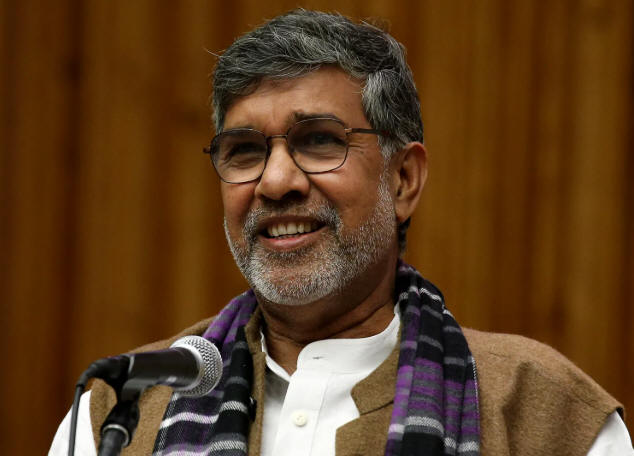
Kailash Satyarthi’s Diyaslai is not just an autobiography—it is a torch
passed from one generation to the next. In this compelling memoir, the Nobel
Peace Prize laureate recounts his journey from being born into the family of a
humble police constable in Vidisha, a small town in Madhya Pradesh, to his
lifelong commitment to social justice, child rights, and global compassion.
The title Diyaslai, meaning “matchstick,” is a powerful metaphor. Satyarthi
sees every rescued child as a spark capable of lighting countless lamps. His own
life is a testament to this belief.
One of the most stirring episodes in the
book is the 1981 rescue of Sabo, a 15-year-old girl on the verge of being sold
into prostitution. Satyarthi, then a young electrical engineer turned activist,
led a daring raid on a brick kiln in Punjab, freeing Sabo and 35 others. That
moment marked the birth of Bachpan Bachao Andolan (Save Childhood Movement),
India’s first civil society-led campaign against child slavery.
Another
defining moment came when he filed a Public Interest Litigation in the Supreme
Court, leading to the release of thousands of bonded laborers. Among them was
Laxman Master, who later became a key ally in the movement. These victories
weren’t just legal—they were deeply human.
Satyarthi’s compassion is global.
He launched the Global March Against Child Labour, mobilizing millions across
103 countries. His message is simple yet profound: “The end of darkness always
begins with a small spark.” In Diyaslai, he invites readers to become that
spark.
The book speaks to the power of grassroots activism, the dignity of
every child, and the moral courage required to challenge injustice. Diyaslai is
not just a memoir—it is a movement. And it reminds us that even the smallest
matchstick can ignite a revolution.
Satyarthi’s legacy is built on tangible
institutions and initiatives:
In 1991, Mukti Ashram was established in
New Delhi to provide short-term rehabilitation for children rescued from bonded
labor, and through vocational training, help them secure their future.
In
1994, the GoodWeave Initiative introduced a pioneering certification and
voluntary social labeling system to ensure that brands and organizations do not
employ child labor in manufacturing or supply chains.
In 1998, he
conceptualized the Global March Against Child Labour, mobilizing 7.2 million
people across 800,000 kilometers in 103 countries to demand an international ban
on hazardous child labor.
Bal Ashram in Rajasthan offers long-term
rehabilitation and education for rescued children.
As founding president
of the Global Campaign for Education, he has championed free, quality public
education for all.
In 2001, his Shiksha Yatra (Education March) carried the
slogan Har Bachche Ka Hai Adhikar—Roti, Khel, Padhai, Pyaar (Food, Play,
Education, Love—Every Child’s Right).
Due to sustained agitation by Satyarthi
and his followers, the Supreme Court of India prohibited child labor in circuses
and banned domestic child labor.
On December 10, 2014, he was awarded the
Nobel Peace Prize “for his struggle against the suppression of children and
young people and for the right of all children to education.”
On March 24, he
formally launched the Satyarthi Movement for Global Compassion, which continues
to receive worldwide support.
Satyarthi, who is a visionary global
thought leader and social reformer has cited Mahatma Gandhi as his inspiration.
.He has written books in English and Hindi and has been bestowed with several
prestigious awards.
His MUST READ inspiring and luminous autobiography is
divided into 24 chapters, wherein he narrates his life journey, personal
anecdotes and challenges faced in advocating for child rights.
'
Oct-17-2025